
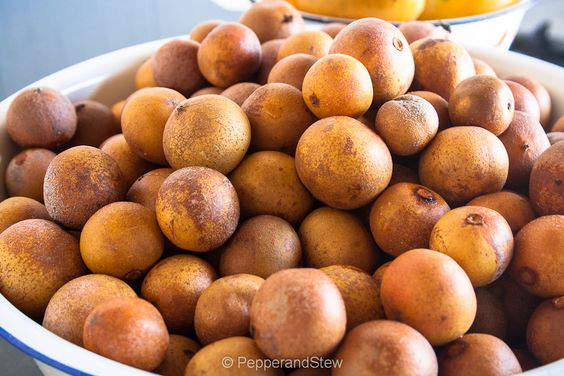
Mazhanje: Zimbabwe’s Famous Indigenous Fruit
Few indigenous fruits are as strongly associated with Zimbabwe as mazhanje.
When the fruit comes into season, its distinctive yellow-to-orange colour, sweet flavour and characteristic aroma make it difficult to miss. For generations, Zimbabweans have gathered mazhanje from the countryside, eaten it fresh and sold it along roadsides and in local markets.
Known scientifically as Uapaca kirkiana, mazhanje is one of the most important indigenous fruit trees of the miombo woodlands of southern Africa. In Zimbabwe it is also known as muzhanje, while an Ndebele name recorded in national plant-genetic-resources documentation is umhobohobo.
What is mazhanje?
Mazhanje is the fruit of Uapaca kirkiana, a tree belonging to the family Phyllanthaceae.
It is naturally distributed across parts of southern and central Africa, including Zimbabwe, Zambia, Malawi, Mozambique and Tanzania. The species is particularly associated with miombo woodland and can grow in relatively dry environments.
This ability to grow under conditions where some exotic fruit trees may struggle is one of the reasons mazhanje has attracted attention as a potentially important indigenous food resource.
The tree behind the fruit
The mazhanje tree is not usually an enormous forest giant. Instead, it forms part of the woodland landscape, sometimes occurring in groups or groves.
Research on Uapaca kirkiana describes it as a characteristic miombo fruit tree and notes that it can occur abundantly in suitable areas. It is associated with well-drained soils and environments with a pronounced wet and dry season.
Its relationship with the surrounding woodland is important. The tree is not simply an agricultural crop; it is part of a larger natural ecosystem.
A fruit people have gathered for generations
Mazhanje has a long history as a traditional food in Zimbabwe.
Research on wild fruits in Zimbabwe found that most rural households made use of edible fruits from indigenous woody plants. The study also found that wild fruits were particularly important during periods of seasonal food stress and that there was a significant trade in wild fruits.
Mazhanje fits naturally into this story.
It has traditionally been collected from trees growing in the wild and eaten by families, while surplus fruit has been sold to other consumers.
What does mazhanje taste like?
A ripe mazhanje has a distinctive sweet and fruity flavour and a soft, fleshy texture.
For many people who grew up eating it, the taste is strongly associated with childhood, rural travel and the arrival of the fruit season.
The fruit is generally eaten fresh once mature. The skin and seeds are not usually the main edible portion; it is the fleshy pulp that people seek.
And because mazhanje is seasonal, part of its appeal comes from its limited availability.
When the season arrives, you enjoy it while it lasts.
Mazhanje at the roadside
One of the most recognisable sights during the mazhanje season is the fruit being sold along Zimbabwe’s roads.
Research and Zimbabwean government documentation describe mazhanje as one of the country’s important indigenous fruits, with fruit sold in urban centres and along highways even though it has historically had little presence in formal commercial markets.
This informal trade is significant.
It demonstrates that an indigenous fruit does not need a supermarket supply chain to have economic value.
A tree growing in a rural area can provide fruit that becomes an immediate source of income for households when the fruit is harvested and taken to market.
More than a seasonal snack
Mazhanje has traditionally been used in several ways.
A Zimbabwean FAO publication documenting traditional food practices records muzhanje (Uapaca kirkiana) as being used for food and traditional alcoholic beverages, while the kernels have also been associated with food uses.
Modern research has expanded interest in the fruit’s possibilities.
A comprehensive review of Uapaca kirkiana describes ripe fruit being eaten raw and notes traditional processing into different products, including non-alcoholic beverages and traditional cakes.
This suggests that mazhanje has always had more potential than simply being eaten straight from the tree.
Mazhanje and nutrition
Mazhanje has attracted scientific interest because of its nutritional composition.
Research reviews describe the fruit as providing essential minerals and identify it as a potential source of vitamin C. At the same time, researchers caution that nutritional data for many indigenous fruits remain limited compared with those available for major commercial crops.
That distinction is important.
Mazhanje can contribute useful nutrients as part of a varied diet, but claims that any indigenous fruit can prevent or cure particular diseases should not be made without appropriate clinical evidence.
The real opportunity is to better understand the nutritional value of foods Zimbabweans already know and consume.
Mazhanje and food security
One of the strongest arguments for indigenous fruits is their relationship with local food systems.
Uapaca kirkiana is adapted to relatively hot and dry conditions and can provide fruit in environments where some exotic fruit crops are less suited. A scientific review identifies its potential contribution to nutrition, food security and rural livelihoods, particularly in arid and semi-arid regions.
This makes mazhanje particularly relevant as Zimbabwe considers how to make food systems more resilient.
Instead of relying exclusively on a small number of imported or commercially cultivated fruits, indigenous trees can form part of a broader agricultural and food-security strategy.
From wild fruit to business
Perhaps one of the biggest opportunities surrounding mazhanje is value addition.
At present, much of the fruit trade is based around fresh fruit. But fresh fruit is highly seasonal and can be difficult to transport and store for long periods.
Processing could potentially change that.
Possible areas for development include:
- Mazhanje juice
- Dried mazhanje
- Mazhanje pulp
- Jams and preserves
- Traditional baked products
- Non-alcoholic beverages
- Other fruit-based products
Research has specifically identified fruit processing, post-harvest handling and marketing as important areas for further development.
The challenge is to develop these opportunities while maintaining food safety, quality and sustainable harvesting practices.
Why processing matters
Imagine two scenarios.
In the first, a farmer harvests mazhanje and has only a few days or weeks to sell the fresh fruit.
In the second, the fruit can be processed into a safe, shelf-stable product that can be sold months later.
The second approach potentially creates a much larger economic window.
It can also reduce losses when large quantities of fruit become available simultaneously during the peak season.
For this reason, better processing technology could be one of the keys to transforming mazhanje from an informal seasonal commodity into a more developed indigenous-food industry.
Protecting the mazhanje tree
There is another side to the mazhanje story: conservation.
Zimbabwe’s national report on plant genetic resources describes Uapaca kirkiana as one of the country’s most prized indigenous fruit trees and notes that it is exploited throughout much of its distribution range. The report also raises concerns about the limited information available on the consequences of uncontrolled harvesting from the wild.
This is an important warning.
If communities depend on mazhanje for food and income, protecting the trees becomes economically important as well as environmentally important.
Conservation, sustainable harvesting and domestication can therefore go hand in hand.
Can mazhanje be cultivated?
Researchers have long considered the possibility of domesticating and improving the cultivation of Uapaca kirkiana.
A major ecological study of the species specifically discussed management and domestication initiatives, recognising the importance of understanding how the tree grows and reproduces before developing effective cultivation systems.
This could eventually allow communities to move from relying almost entirely on naturally occurring trees to deliberately cultivating selected trees.
Such a transition could help create more reliable supplies while reducing pressure on wild populations.
Mazhanje and Zimbabwean identity
There is also something cultural about mazhanje that cannot easily be measured in nutritional tables.
Ask someone who grew up eating mazhanje about it, and the answer may involve memories of:
- Rural holidays
- Family gatherings
- Roadside vendors
- Children searching for ripe fruit
- The beginning of the fruit season
- Long journeys through the countryside
Food is often connected to memory.
Mazhanje therefore belongs not only to Zimbabwe’s natural heritage but also to its social and cultural heritage.
Preserving indigenous knowledge
Knowledge about mazhanje includes much more than knowing the fruit’s name.
It includes knowing:
- What the tree looks like
- Where it naturally grows
- When the fruit is ready
- How ripe fruit is recognised
- How the fruit is eaten
- How it can be processed
- Where it can be sold
- How the trees are traditionally managed
Much of this knowledge has historically been passed from one generation to another.
Documenting it is important because indigenous food knowledge can disappear even while the plants themselves remain.
Mazhanje at a glance
Common Zimbabwean name: Mazhanje / Muzhanje
Ndebele name: Umhobohobo
Scientific name: Uapaca kirkiana
English: Wild indigenous fruit; commonly referred to as wild loquat in some literature
Family: Phyllanthaceae
Habitat: Miombo woodland and related dry woodland environments
Traditional use: Fresh fruit and processed food products
Other traditional uses: Beverages and traditional food products
Economic role: Fresh-fruit sales, particularly roadside and local markets
Potential: Processing, value addition, food security and rural livelihoods
A fruit worth rediscovering
Mazhanje is sometimes described simply as a wild fruit.
But that description does not capture its full importance.
It is a food source, a seasonal commodity, a source of household income, a component of Zimbabwe’s woodland ecosystems and a repository of traditional knowledge.
It also represents an opportunity.
With appropriate conservation, research, cultivation, processing and marketing, Zimbabwe’s indigenous fruits could play a larger role in the country’s future food economy.
And perhaps the next time you see a roadside table piled high with golden-brown mazhanje, you will see more than a seasonal snack.
You will see a piece of Zimbabwe’s natural heritage — and a resource with possibilities for the future.