
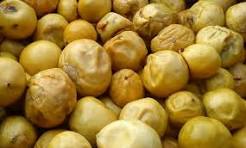
Umviyo: Zimbabwe’s Wild Medlar
Long before indigenous fruits began appearing in conversations about food security, nutrition and local enterprise, fruits such as umviyo were already part of Zimbabwean life.
Known in English as the wild medlar or velvet wild medlar, umviyo is the fruit of Vangueria infausta, a native African tree found widely across Zimbabwe and other parts of sub-Saharan Africa. In Shona, it is known by names including munzvirwa, munzviro, munjiro and mudzvirungombe.
For generations, the fruit has been gathered and eaten as a seasonal food. Today, researchers are increasingly interested in its nutritional composition, functional properties and potential for value addition.
What is umviyo?
Umviyo comes from Vangueria infausta subsp. infausta, a deciduous shrub or small tree belonging to the Rubiaceae family.
The tree generally grows between about 3 and 8 metres tall. It can have several stems, with greyish to yellowish-brown bark and branches covered with fine hairs. Its leaves are relatively large and distinctive, while the fruit is rounded and develops into a yellowish-brown fruit when mature.
The species is native to Zimbabwe, and the Flora of Zimbabwe records umviyo as one of its Ndebele names.
The wild medlar
The English name wild medlar gives a useful clue about the fruit’s character.
When ripe, umviyo develops a soft, mealy flesh with a pleasant sweet-sour flavour. Recent research describes its taste as somewhat similar to an apple.
The fruit is therefore quite different from the crisp texture of an ordinary cultivated apple. Its soft, almost creamy or mealy texture is one of the characteristics that makes it distinctive.
For people who grew up eating indigenous fruits, however, this unusual texture is not strange at all. It is simply part of what makes umviyo umviyo.
When does umviyo appear?
Umviyo is a seasonal fruit.
Research on Vangueria infausta in Zimbabwe reports that the tree generally flowers between September and November, with the fruits ripening from approximately November to April.
That makes the fruit an important seasonal resource, particularly in communities where indigenous fruits remain part of the local food system.
The exact timing can naturally vary according to location, rainfall and other environmental conditions.
How is umviyo eaten?
Traditionally, ripe umviyo is eaten fresh and raw.
The fruit can also be dried, extending its usefulness beyond the immediate harvesting period. Research on Zimbabwean indigenous foods records traditional consumption of the fruit and its use in processed forms.
Modern research has also noted possibilities for processing umviyo into products such as:
- Juice
- Jam
- Dried fruit
- Flavouring ingredients
- Other value-added food products
The fruit has also traditionally been used as a flavouring ingredient in porridge.
A fruit with an interesting flavour
One of the reasons umviyo deserves more attention is its flavour profile.
Researchers describe the ripe fruit as having a sweet-sour, mealy taste, with similarities to apple.
This combination could make the fruit interesting for food-product development.
Instead of thinking of umviyo only as something eaten directly from the tree, it can also be viewed as a potential raw material for locally developed products.
Umviyo and nutrition
Indigenous fruits are increasingly being investigated for their nutritional and functional properties.
A 2025 study specifically examined Zimbabwean Vangueria infausta fruit, investigating its phytochemicals, volatile compounds, organic acids and antioxidant activity. The researchers detected several groups of phytochemicals, including phenols, flavonoids, tannins, terpenoids and glycosides.
These findings are scientifically interesting, but they should not be interpreted as proof that umviyo is a treatment for particular illnesses. Nutritional research and laboratory measurements are different from clinical evidence.
What they do demonstrate is that this traditional fruit contains a range of compounds worthy of further study.
From traditional food to scientific research
For a long time, indigenous fruits received relatively little attention from formal food research.
That is changing.
A 2025 study by researchers from Midlands State University and the University of Eswatini examined umviyo collected from vendors at Ascot Market in Gweru. The research looked at its functional properties and chemical composition.
This is significant because it shows how traditional foods can move from local knowledge into modern scientific investigation.
The researchers also identified the need for further work on value addition, propagation and conservation of the fruit.
Umviyo and household livelihoods
Indigenous fruits can have an economic role as well as a nutritional one.
Research into Zimbabwe’s indigenous fruits notes that these foods are increasingly appearing in urban markets and can contribute to household income. At the same time, substantial quantities can be lost because of limited processing and preservation infrastructure.
This creates an interesting opportunity.
If umviyo can be harvested sustainably and processed appropriately, it could potentially support small-scale enterprises producing things such as dried fruit, juices, jams and other food products.
The challenge is to develop these opportunities without undermining the communities and traditional knowledge that have preserved these resources.
Why value addition matters
Imagine the difference between selling a seasonal fruit only when it is fresh and being able to transform it into a product with a longer shelf life.
Value addition could potentially allow umviyo to move from:
Tree → fresh fruit
to:
Tree → processing → packaged food → market
This could help reduce post-harvest losses while creating additional economic opportunities.
Zimbabwe’s research literature on indigenous fruits identifies processing, preservation and commercialization as areas that still require greater development. A review found that traditional processing and preservation methods have been documented for only a portion of the many indigenous fruits recorded in the country.
Umviyo and traditional knowledge
There is also an important cultural dimension to this fruit.
Traditional knowledge includes understanding:
- What the tree looks like
- Where it grows
- When it flowers
- When the fruit becomes ripe
- How the fruit is eaten
- How it can be preserved
- What local names are used for it
This knowledge is often passed between generations rather than written in textbooks.
As lifestyles change, documenting this information becomes increasingly important.
The name umviyo itself is part of that cultural heritage.
Indigenous fruits and biodiversity
An indigenous fruit tree is not simply a food-producing machine.
It is part of an ecosystem.
Protecting indigenous trees can help maintain plant diversity while retaining traditional food resources. This is particularly important when agricultural expansion, land-use changes and the loss of traditional knowledge threaten locally important plant species.
The future of umviyo therefore involves more than finding ways to sell the fruit. It also involves asking how the trees can be propagated, conserved and sustainably harvested.
What makes umviyo special?
Perhaps the most interesting thing about umviyo is the way it connects several different worlds.
It is:
A traditional food — eaten by communities for generations.
A seasonal resource — appearing during particular months of the year.
A nutritional resource — containing various naturally occurring compounds.
A research subject — now being studied scientifically.
A potential economic resource — with possibilities for processing and value addition.
A cultural resource — carrying names and knowledge passed between generations.
Umviyo at a glance
Ndebele name: Umviyo
Scientific name: Vangueria infausta subsp. infausta
English names: Wild medlar, velvet wild medlar
Shona names: Munzvirwa, Munzviro, Munjiro, Mudzvirungombe and related names
Family: Rubiaceae
Plant: Deciduous shrub or small tree
Fruit: Round, soft, mealy fruit that becomes yellowish-brown when ripe
Taste: Sweet-sour and somewhat apple-like
Flowering: Approximately September–November
Fruit ripening: Approximately November–April
Traditional uses: Fresh fruit, dried fruit, juice, jam and flavouring for porridge
More than a forgotten fruit
Umviyo deserves to be remembered not because it is exotic, but because it is ours.
It belongs to a long tradition of Zimbabwean communities finding food in their surrounding landscapes and developing knowledge about the plants that sustained them.
Today, that knowledge can meet modern science.
Researchers can investigate its nutritional composition. Farmers can explore propagation. Food processors can investigate value-added products. Communities can preserve the traditional knowledge surrounding the tree.
And consumers can rediscover the flavours that existed long before many modern food products arrived on Zimbabwean shelves.
Umviyo is more than a wild medlar. It is a small fruit carrying a much bigger story about Zimbabwe’s food heritage, biodiversity and future.